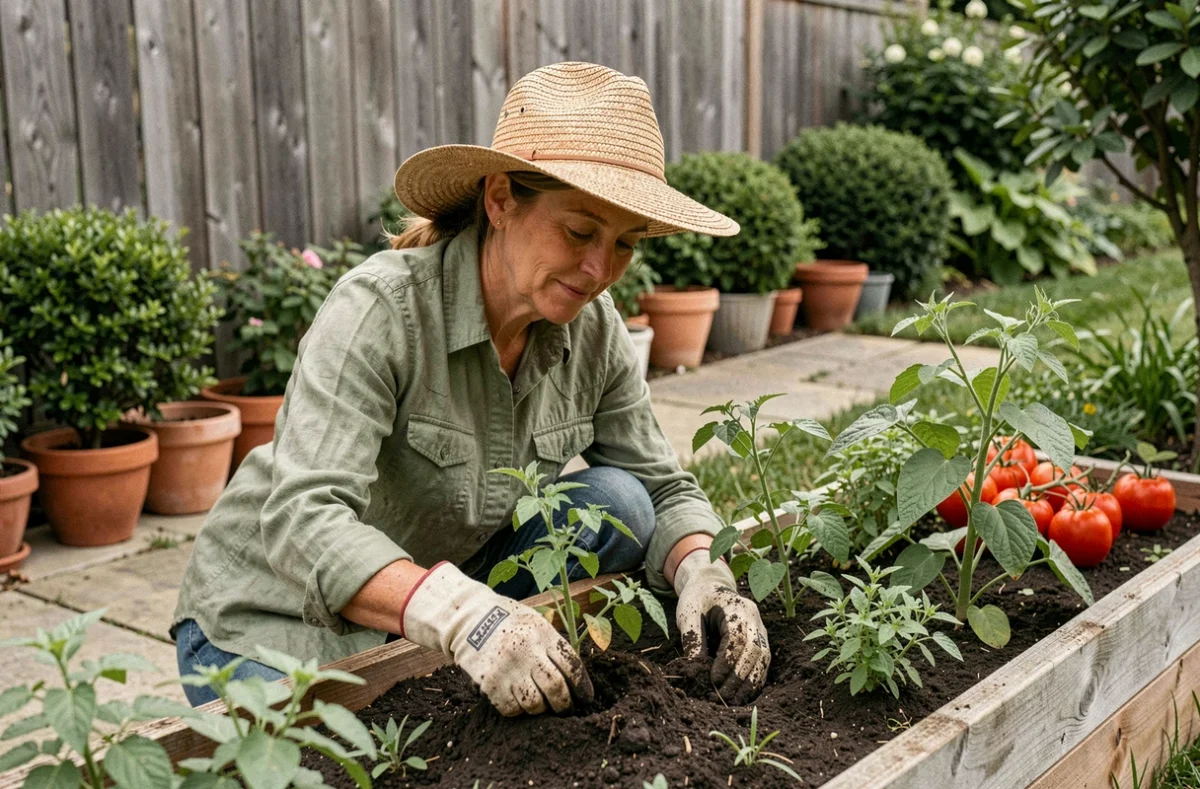
A stay in the garden is based on a simple principle: adapting the equipment to the actual use of the space. Relaxation furniture, sun protection, irrigation systems, or suitable lighting, each category of garden equipment meets a specific need. The choice is not made from an exhaustive list of accessories, but by first identifying how the garden is used on a daily basis, whether for meals, reading, or maintaining the vegetable patch.
Shade and sun protection: the often-overlooked prerequisite
Before choosing a deckchair or garden lounge set, the issue of shade needs to be addressed. Terrace furniture exposed to full sun for several hours a day becomes unusable between May and September without appropriate protection. Feedback presented at conferences on urban heat, such as that of Adivet, confirms that shade significantly reduces direct radiation and improves perceived thermal comfort.
There are three main solutions for covering an outdoor space:
- The shade sail, stretched between fixed anchor points, which filters a large part of the radiation while allowing air circulation. It is suitable for medium-sized terraces and can be dismantled at the end of the season.
- The cantilever umbrella, more mobile, which allows following the sun’s path throughout the day. Its weighted base makes it autonomous, without wall fixation.
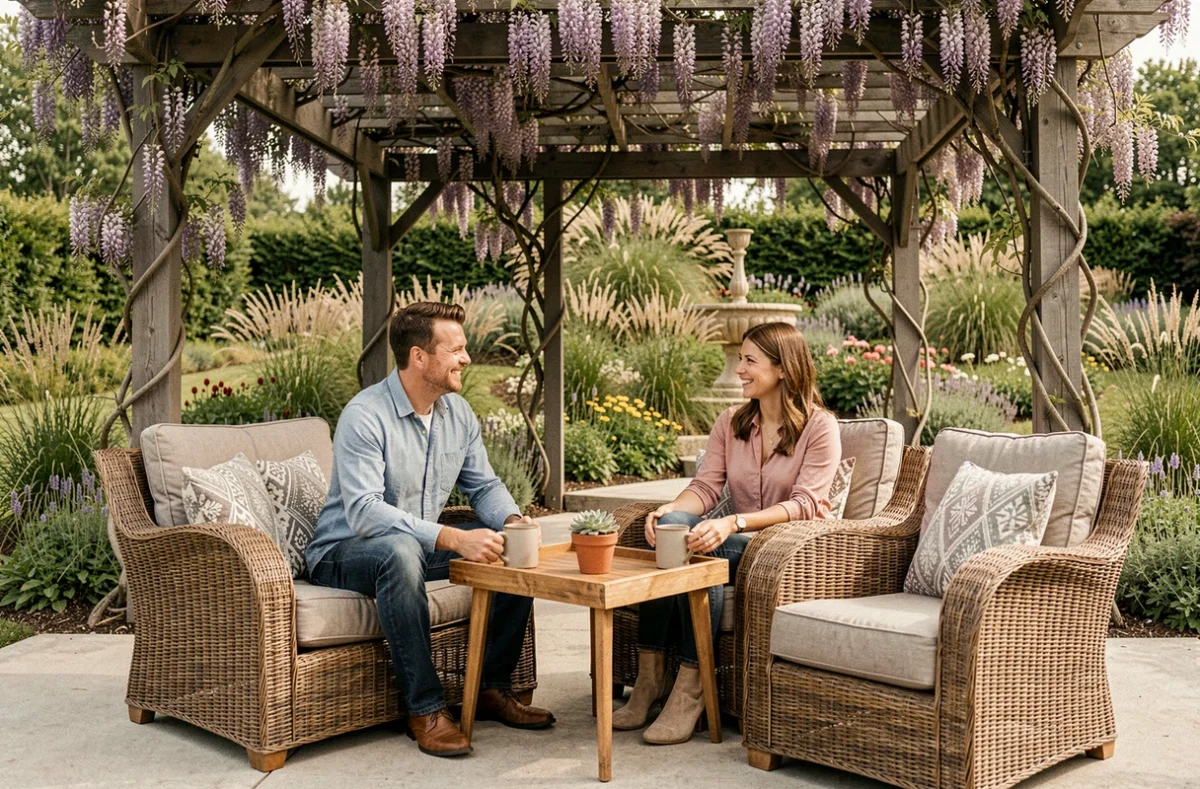
- The gazebo or pergola, a permanent or semi-permanent structure, ideal for defining a true outdoor living space over time. It can accommodate climbing plants that enhance natural shade.
The choice depends on the area to be covered, the orientation of the garden, and the budget. Installing shade before the furniture avoids having to move the setup once summer arrives.
To select the appropriate equipment for each configuration, the equipment offered by Escapades aux Jardins covers these different categories with references designed for prolonged outdoor use.
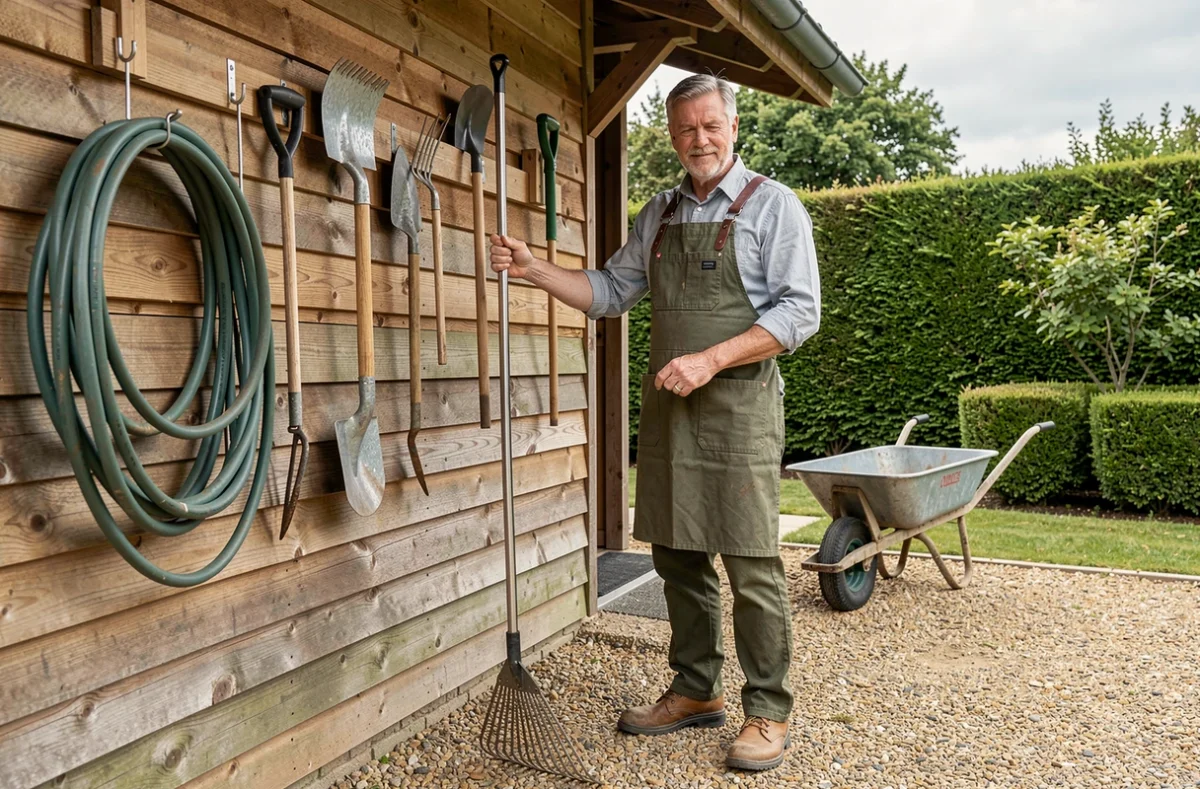
Garden furniture: choosing according to the actual use of the space
Market data for France for 2025, reported by Jarditips from the FJAF-FMB panel and NielsenIQ, shows that purchases of outdoor decoration and leisure are increasing while motorized tools are declining. The garden is increasingly experienced as a living space, not just as a maintenance area.
This trend has a direct consequence on the choice of furniture. A garden primarily used for family meals does not have the same needs as a space oriented towards reading or napping.
In the first case, an extendable table with stackable chairs made of woven resin or aluminum offers a good compromise between sturdiness and practicality. In the second, a hammock or a treated wooden deckchair withstands the weather better than a simple fabric model.
Materials and maintenance of outdoor furniture
Wood (teak, acacia, treated pine) requires annual maintenance, with the application of oil or saturator to maintain its hue. Aluminum and woven resin only require cleaning with soapy water. The material determines both the lifespan and the maintenance time, which affects the real cost in the medium term.
A rarely mentioned point: the weight of the furniture. Lightweight aluminum chairs are easy to move to follow the shade, while a cast iron lounge set remains fixed. This practical constraint influences the choice as much as aesthetics.
Garden watering: anticipating restrictions before investing
A programmable automatic irrigation system represents a real time saver for maintaining flower beds and the vegetable patch. Drip irrigation, micro-sprinklers, or porous hoses adapt to different configurations depending on the area and type of planting.
Before any purchase, a verification is necessary. During periods of drought, prefectural orders may limit or prohibit garden watering. The public service VigiEau allows consultation of the restrictions applicable to one’s address. Programming an automatic watering system without considering these rules exposes one to fines.
Drip irrigation remains the most water-efficient solution: it delivers the flow directly at the base of the plants, with no loss through evaporation. For a vegetable patch or planters on a terrace, this system significantly reduces consumption compared to a traditional oscillating sprinkler.
Outdoor lighting: nighttime comfort and regulatory framework
Extending evenings in the garden requires appropriate lighting. Solar garlands, low bollards, recessed ground spots: the options are plentiful. The choice is made based on the desired ambiance and the area to be illuminated.
A technical aspect often overlooked concerns regulations. Poorly oriented lighting can constitute a neighborhood disturbance, especially if powerful floodlights or spots direct their beams towards neighboring properties. Jurisprudence recognizes this type of nuisance, and there are remedies for disturbed neighbors.
Lighting and nocturnal biodiversity
Turning off unnecessary garden lights at night helps local wildlife. Pollinating insects, bats, and nocturnal birds are disturbed by light pollution. Motion-detecting lighting, which only activates upon passage, represents a good compromise between comfort and respect for the environment.
Solar models with integrated batteries have the advantage of requiring no wiring. Their autonomy depends on the sunlight received during the day, making them more suitable for well-exposed areas than for very shaded gardens.
Barbecue and outdoor dining space: the right sizing
The barbecue remains one of the most sought-after pieces of equipment for setting up a dining area in the garden. Charcoal, gas, or electric, each energy source has its constraints. Charcoal produces the most aromatic cooking but generates smoke that can disturb neighbors in densely populated areas. Gas offers quick heating and precise control. Electric is suitable for balconies and terraces where open flames are prohibited by condominium regulations.
The size of the grill should correspond to the usual number of guests, not the theoretical maximum. A cooking surface too large for two people wastes fuel unnecessarily and complicates cleaning.
Pairing the barbecue with a serving cart or an outdoor work surface on stable ground, away from dry vegetation, completes the setup without requiring heavy construction. A reasonable distance from the dining table prevents smoke from bothering guests during the meal.
Equipping a garden is not just about accumulating accessories. Each element, from shade to irrigation system, benefits from being thought out according to the orientation of the land, actual habits, and local constraints. A well-equipped garden with four or five carefully chosen elements will always be more enjoyable than a space overloaded with underutilized equipment.