
A battery-powered trimmer can lose up to 20% of its power when faced with wet grass. In contrast, a gas model maintains its pace without faltering. Behind the marketing talk about the versatility of rotary heads lies a more nuanced reality: compatibility, often touted as universal, ultimately remains limited to a few carefully selected models.
The technical differences between trimmers and brush cutters are not just found on the product sheet: they are measured in the field, depending on the surface and structure of the garden. On flat terrain, ergonomic handles or reinforced wire do not change the game. But on slopes or in hard-to-reach corners, these details can shift the user experience.
Trimmer or brush cutter: what are the differences for which garden?
Sorting between trimmer and brush cutter comes down to assessing the nature of the terrain and the intensity of maintenance work to be expected. The trimmer, lightweight and agile, is aimed at those who want to refine the edges: clean borders, tree contours, well-defined flower beds. It complements the lawn mower where it struggles, at the edge of the lawn, in corners, and along obstacles. It is the ally of medium-sized gardens, where consistency takes precedence over raw power. The brush cutter, on the other hand, comes into play on rough, overgrown, or neglected terrains. With its metal blade or thick wire, it tackles tall grasses and brambles. Heavier, it requires a minimum of familiarity and imposes regular breaks to avoid fatigue. It is not a supplementary tool, but rather a partner for large spaces or landscaping renovation work.
To better visualize their use, here is what distinguishes these two tools:
- The trimmer: ideal for finishing touches, small spaces, and maneuvering around flower beds, trees, or other common obstacles.
- The brush cutter: suitable for large jobs, neglected terrains, or areas covered with thick grass.
The site taille-bordure-warrior.com offers a comparison of the flagship models of 2026 to help refine the choice based on the terrain and maintenance expectations. The best tool is the one that adapts to the complexity of your borders, the density of the grass, and your working style. Nothing replaces the suitability between the tool and the action.
The essential criteria for finding the tool perfectly suited to your needs
Power source and autonomy: corded or battery?
To decide between corded electric and battery model, simply observe the layout of the garden. The battery-powered trimmer offers total freedom of movement: you can navigate around flower beds and paths without being hindered by a cord. On a large area, it is better to aim for a battery life of at least 40 minutes, with a battery capable of lasting the distance and minimizing power loss. The corded model, on the other hand, does not experience a dead battery: plugged in, it performs well, provided there is an accessible outlet within reach.
The technical elements not to overlook
Before choosing, several technical criteria deserve attention:
- Cutting width: a generous diameter speeds up maintenance on large areas, while a narrower cut allows for increased precision around obstacles.
- Type of wire or blade: nylon wire for fine grasses, plastic blade for denser vegetation, metal blade for thick borders or tough brambles.
- Telescopic handle and adjustable handle: these adjustments ensure comfort. They allow the tool to be adapted to the user’s height and the shape of the terrain, and protect the back during prolonged use.
The value for money is not limited to the purchase price. It is also necessary to consider the battery longevity, the robustness of the motor, and the overall durability of the materials. User reviews, practical tests, and feedback on long-term reliability are valuable allies. A well-designed tool means fewer constraints, less maintenance, and a garden maintained without unnecessary effort.
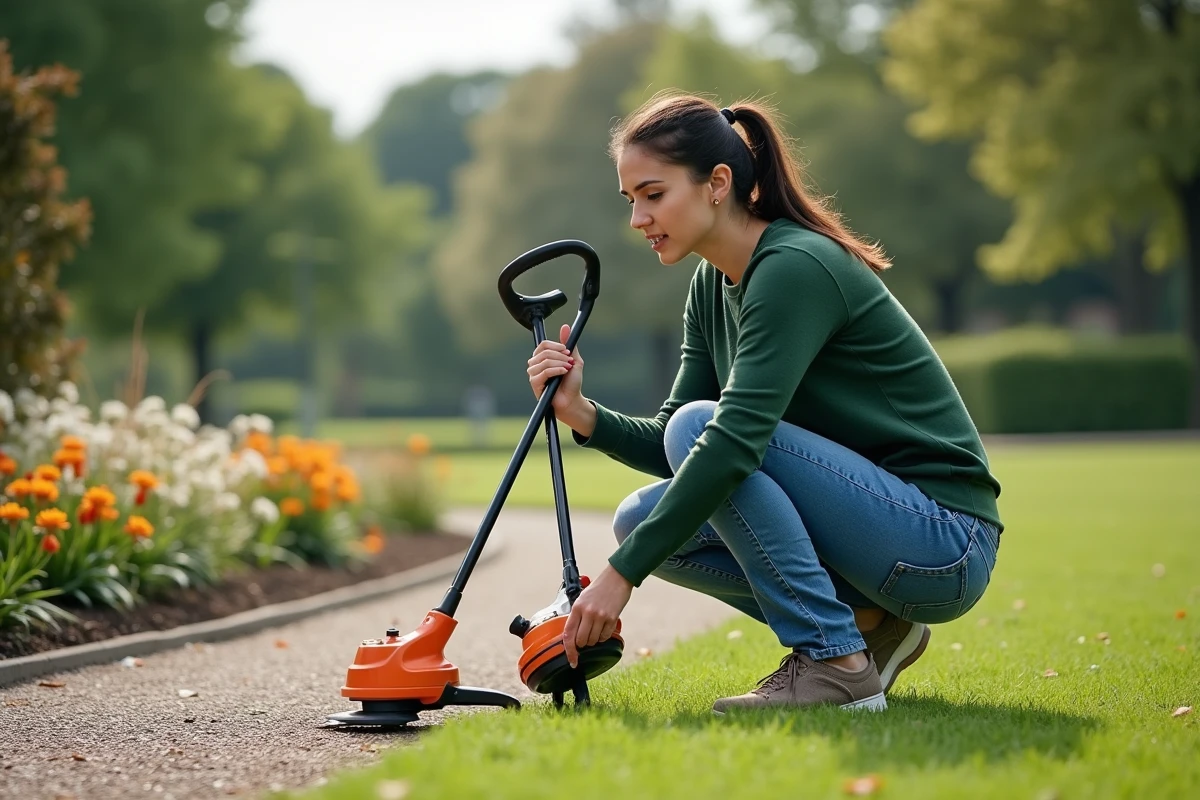
Comparison, usage tips, and maintenance advice for a perfect garden all year round
Comparison: performance and durability at the heart of the choice
The range of trimmers stands out for its multitude of features that cater to every type of gardener. For regular home use, it is better to prioritize models that combine ease of maintenance and robustness. User reviews often highlight the importance of an accessible cutting head, which facilitates the replacement of nylon wire and cleaning. In this regard, the speed of disassembly and resistance to wear separate the good performers from the rest.
To illustrate the different uses, here are some useful guidelines:
- For a medium-sized garden, prioritize a sufficiently powerful motor and a cutting width consistent with finishing needs.
- On the battery side, aim for a minimum autonomy of 30 minutes to be able to handle all borders in one go, without interruption.
Usage tips: preserving quality and performance
To keep a tool effective, just a few gestures after each use are enough: clean the cutting head to remove grass residues and dirt, which prevents premature clogging. Replacing the wire is frequent: it’s best to have a spare spool on hand and regularly check its compatibility with the chosen model. After a period of rest, a full battery recharge and a quick inspection of moving parts are recommended before resuming work.
Maintenance tips: long-term efficiency
Remember to periodically check the condition of the telescopic handle and adjustable handle: their stability affects comfort and safety during maintenance. Taking advantage of a visit to customer service, especially during a Black Friday event, can help extend the warranty or check major wear parts for free.
A perfectly maintained garden reflects well-chosen tools, methodically maintained and used wisely. Over the seasons, the difference is visible and felt with every pass over the borders.