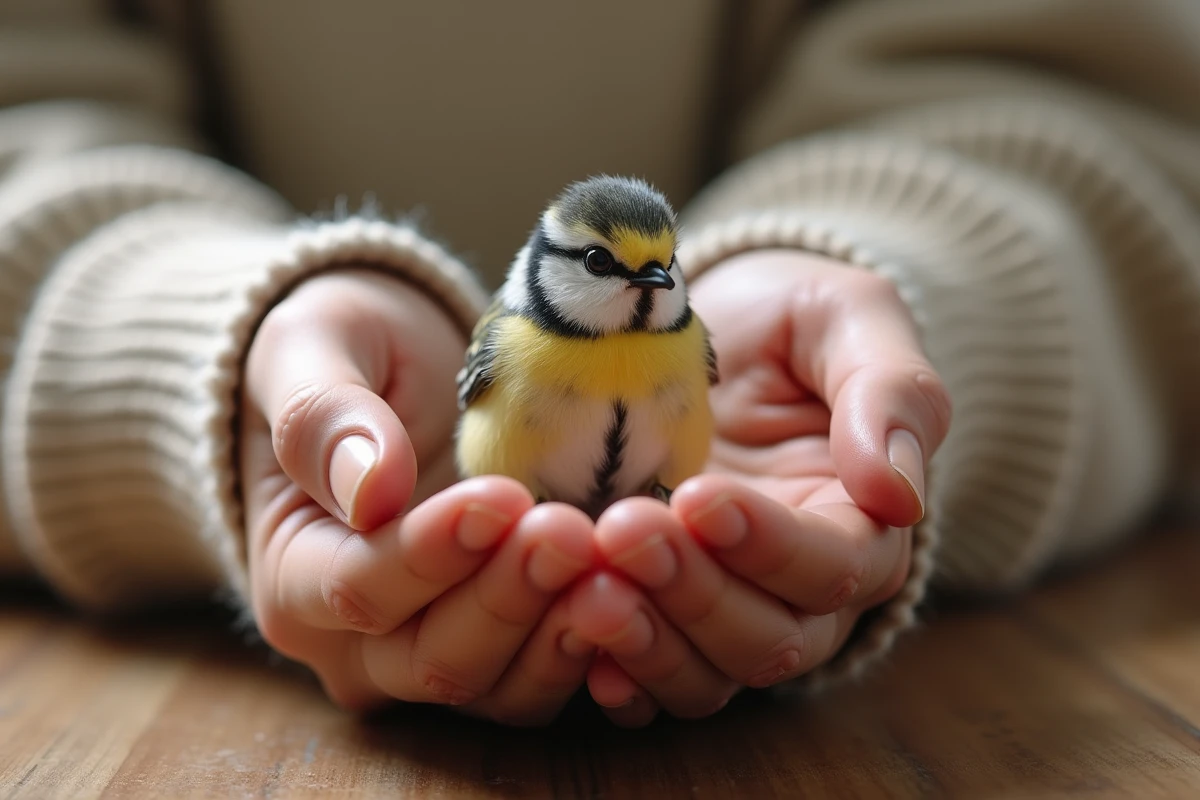
A great tit chick on the ground does not necessarily need help. Before any handling, the priority is to determine whether it is a true chick that has fallen from the nest or a juvenile in the process of fledging, already being followed by its parents outside the nest. This distinction conditions all subsequent actions, including the decision to feed it or not.
Naked chick or fledged juvenile: two situations, two responses
The great tit leaves the nest before it can fly. A young bird on the ground, covered in feathers, hopping and making sounds, is often learning. Its parents continue to feed it nearby.
Intervening in this case means separating the juvenile from its parents, which reduces its chances of survival. The LPO PACA recommends observing it from a distance for at least two hours before concluding abandonment.
The truly critical case concerns the naked or nearly naked chick, unable to stand on its feet. This stage corresponds to the first days of life when falling from the nest exposes it to rapid hypothermia. It is only in this situation that intervention is justified, with a clear goal: to stabilize the chick for transfer to a licensed care center.
To learn how to properly feed a baby great tit, one must first understand what happens in its body when it is on the ground.
Warming before feeding: a common mistake to avoid
The first reflex of most people who find a chick is to look for something to feed it. Current recommendations from wildlife rescue centers emphasize a different point: a chick in hypothermia does not digest. Feeding it too early can worsen its condition or even cause its death.
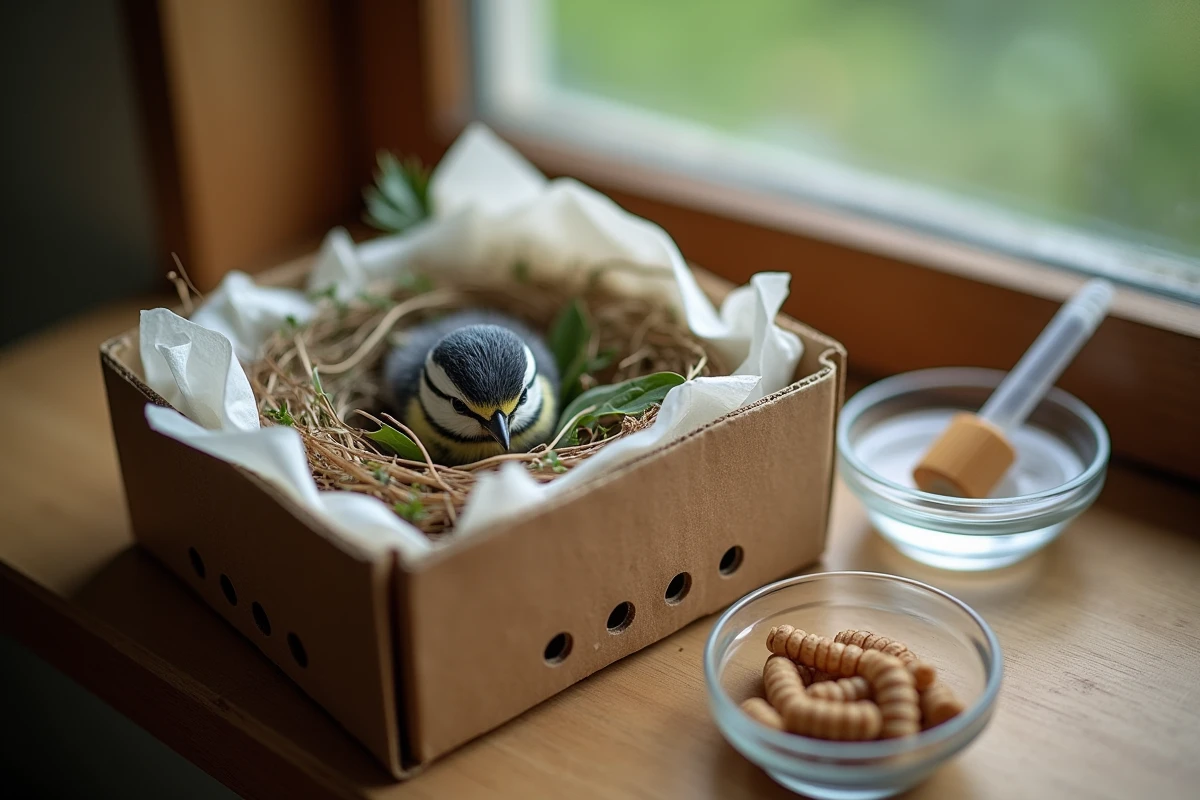
The procedure begins with warmth. A cardboard box lined with absorbent paper, placed in a quiet spot at a stable room temperature, is sufficient for the first few hours. Some use a warm water bottle wrapped in cloth, placed under the cardboard.
Once the chick is warmed and responsive (it opens its beak spontaneously when a finger approaches), hydration takes precedence over feeding. A few drops of lukewarm water placed on the edge of the beak, without forcing it open, help correct initial dehydration.
Emergency feeding of a great tit chick
The great tit is primarily insectivorous during the feeding period. Parents bring caterpillars, spiders, and small soft insects to the chicks. Any substitute feeding must closely resemble this diet.
Suitable emergency foods
- Cat kibble softened in lukewarm water until it forms a soft paste. This substitute is rich in animal protein and easy to find in an emergency.
- Crumbled hard-boiled egg yolk, mixed with a few drops of water to form a paste-like consistency. The yolk provides lipids and proteins similar to the needs of the young passerine.
- Small live insects (mealworms, aphids, small spiders) if you can quickly obtain them. They provide the closest diet to the natural regime.
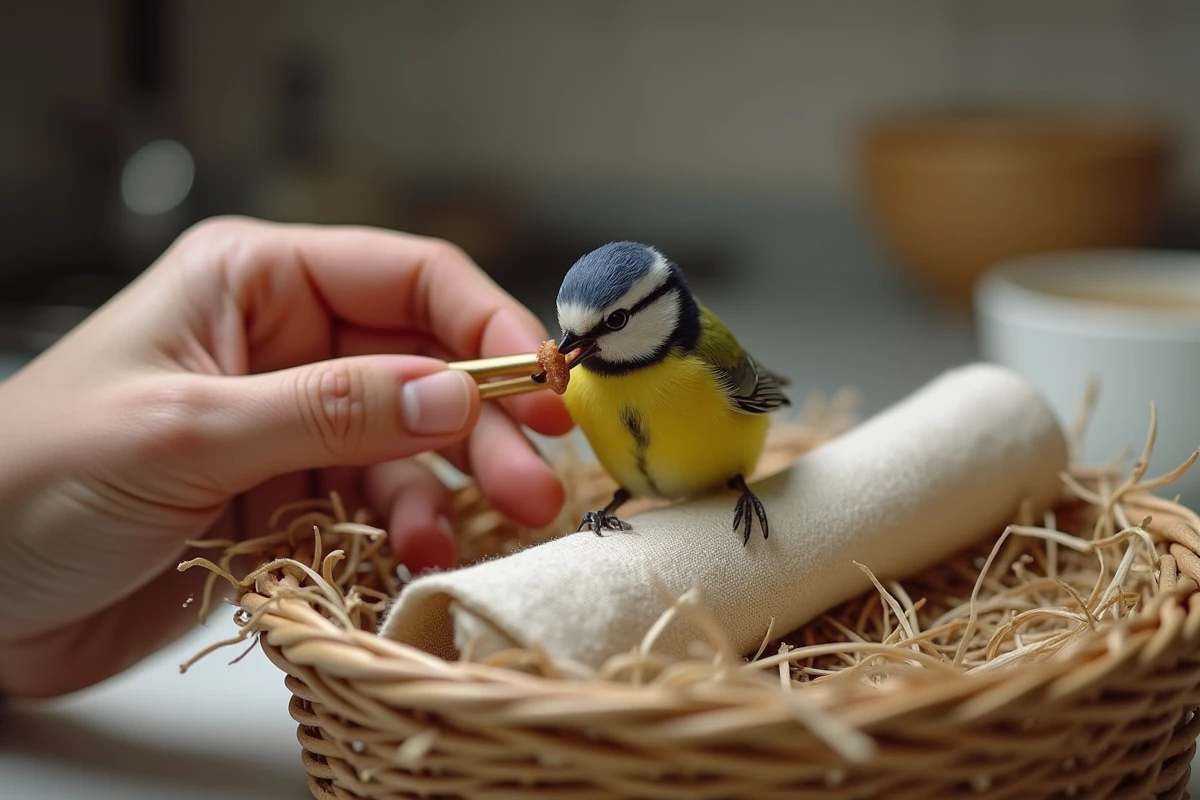
The food is placed at the back of the open beak using a rounded tweezers or a blunt toothpick. The frequency of feedings is high: every two to three hours during the day, from sunrise to sunset. No feeding at night.
Foods to avoid
- Bread, milk, and dairy products cause serious digestive disorders in passerines.
- Dry seeds are unsuitable for the chick stage: the digestive system is not yet capable of processing them.
- Earthworms may contain parasites and are discouraged by care centers.
After each feeding, the chick produces a droppings wrapped in a white membrane. It should be removed immediately with a dedicated tweezers (different from the one used for feeding) to keep the nest clean, just as the parents would do.
Contacting a rescue center: the only viable option
Feeding a chick at home remains a temporary solution, not a goal. French legislation prohibits the keeping of protected wild species, and the great tit is one of them. Keeping a chick at home beyond what is strictly necessary exposes one to health complications for the animal and legal action for the keeper.
Wildlife rescue centers have suitable facilities, calibrated nutritional protocols, and expertise in behavioral rehabilitation. A chick raised too long by a human risks imprinting: it becomes accustomed to human presence and loses the ability to feed itself or recognize predators.
To locate the nearest licensed center, the LPO network offers a directory by region. A call often provides phone advice while waiting for transfer.
The great tit remains one of the most common passerines in France, and its chicks on the ground are part of the normal functioning of the species. The majority of young found on the ground do not need human intervention. When intervention is justified, it is limited to stabilizing the chick through warmth, appropriate feeding, and rapid transfer to equipped professionals.