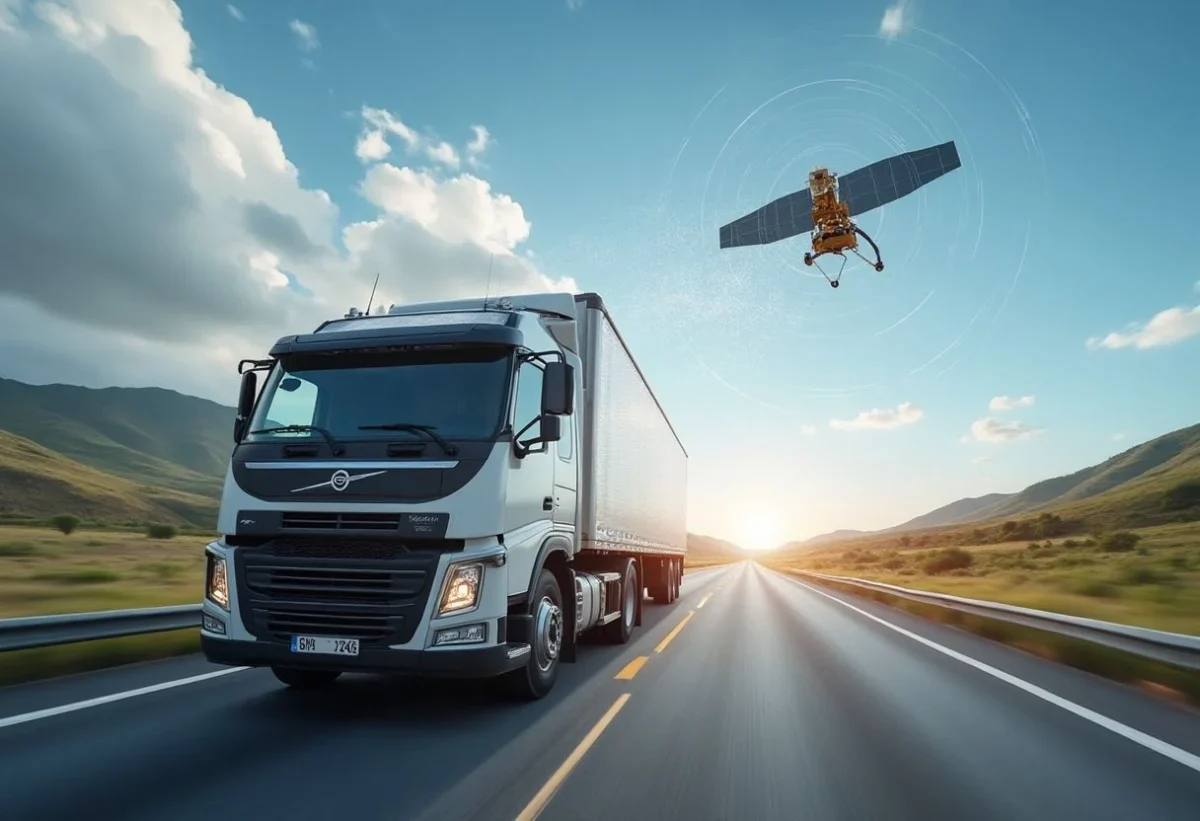
In the vast world of road transport, route optimization and efficient fleet management are constant challenges. With the advent of new technologies, one tool has become indispensable: geolocation. This technology offers innovative perspectives for tracking, controlling, and securing vehicles on the roads. It not only transforms the way companies manage their fleets but also redefines safety and profitability standards in the transport sector.
How Truck Geolocation Works
To fully understand the impact of geolocation, it is essential to first know how it works. Based on a network of satellites, this technology uses GPS signals to determine the exact position of a vehicle at any moment. The information collected is then transmitted in real-time to software platforms, allowing for centralized and efficient management.
- GPS System: at the heart of geolocation, GPS captures signals from various satellites to calculate the precise position of the truck.
- Software Platforms: once the GPS data is collected, it is analyzed by specialized software that provides detailed information on movement, speed, and route.
- Real-Time Communication: these systems allow fleet managers to instantly access this data, thus facilitating informed decision-making.
Strategic Advantages for Businesses
The integration of geolocation in the transport sector brings numerous strategic advantages. Transport companies can now track their trucks in real-time, enabling them to respond quickly to unforeseen events and improve their customer service.
The primary strength of this technology lies in its ability to optimize routes. By analyzing live traffic data, fleet managers can choose the most efficient routes, thereby reducing transport time and costs. Optimal route management leads to significant savings in fuel and maintenance.
Furthermore, safety is enhanced through geolocation. Real-time alerts for dangerous driving behaviors or unauthorized stops help prevent accidents and protect goods. Finally, increased transparency in transport operations also improves customer relations. Customers can be informed at every stage of their delivery process, thus strengthening trust and satisfaction.
Ethical and Legal Issues
While truck geolocation offers many benefits, it also raises ethical and legal questions that need to be examined. The collection and use of GPS data must respect drivers’ privacy and comply with current legislation.
First, the right to privacy is a major concern. Companies must ensure that tracking trucks does not become intrusive surveillance of drivers. It is essential to establish clear and transparent policies regarding the use of personal data.
Next, data protection legislation is constantly evolving. Companies must ensure that their geolocation practices comply with regulations such as GDPR in Europe. Responsible data management is essential to avoid legal penalties and maintain a trusting relationship with employees.
The Future of Geolocation in Transport
Geolocation continues to evolve, promising new technological advancements for the transport sector. The future of this technology is marked by the integration of artificial intelligence and predictive analytics, offering even more personalized and efficient solutions.
Upcoming innovations will not only allow for real-time vehicle tracking but also predict breakdowns and optimize fuel management. Moreover, company truck geolocation could extend to automated fleet management, where trucks would be able to communicate with each other to avoid traffic and danger zones.
The rise of autonomous vehicles and intelligent transport systems could also radically transform the application of geolocation. Companies will need to adapt to these rapid changes to remain competitive and take advantage of the opportunities offered by these cutting-edge technologies.
Truck geolocation has revolutionized the road transport sector by providing new opportunities for optimization and security. Although ethical and legal concerns remain, the benefits for businesses and consumers are tangible.