
A child who refuses to put on their shoes at 8:12, a meal that derails into negotiation, an evening where bedtime stretches endlessly: we all know those moments when patience wears thin. Educating children with kindness doesn’t require becoming a perfect parent, but rather adjusting a few concrete reflexes. The ten tips that follow stem from everyday situations to propose actionable gestures starting today, without guilt or jargon.
1. Physically lower yourself to the child’s level before speaking
When calling from the kitchen to ask them to tidy up, the message gets lost. Bending down to speak eye to eye changes the quality of the exchange. The child better grasps the information, and we avoid raising our voice by reflex.
Véronique Maciejak, a trainer in positive discipline, emphasizes this point: there’s no need to shout from one room to another. Getting closer, kneeling down, and speaking normally is often enough to gain the cooperation we seek. You can find more insights on the subject, particularly at https://maman-bienveillante.com/, which gathers resources to support parenting in daily life.
2. Phrase the rule positively rather than as a prohibition
“Don’t run!” works poorly because the child’s brain processes the action before the negation. Saying “walk slowly” gives them a clear instruction to follow.
Replacing the prohibition with the expected rule reduces back-and-forth. Instead of “don’t hit your sister,” we can say “gently place your hand on her arm.” We describe what we want to see, not what we want to avoid.
3. Describe the consequences instead of threatening
“If you don’t tidy up, you will be punished” puts the parent in the role of a cop. Describing the concrete consequence (“if the Legos stay on the floor, someone might step on them and break them”) allows the child to assess the situation themselves.
We don’t judge, we inform. The child understands the cause-and-effect logic without feeling a direct threat. Reactions vary on this point: some children respond quickly, while others need several repetitions before grasping the mechanism.
4. Replace “hurry up” with a concrete time reference
The morning “hurry up” generates stress without providing useful information. Giving a timer to the child turns the rush into a challenge. We can say “you have the time of the hourglass to put on your shoes”: they manipulate a visual tool and understand the duration.
This tip, derived from positive discipline, works particularly well for children aged 3 to 7. The child moves from a vague injunction to a framework they can control, which reduces morning conflicts.
5. Create a routine chart with the child
A chart displayed in the entrance or bathroom, designed together, provides a visual framework that the child can consult independently. They know what comes after breakfast without needing reminders.
Involving them in creating the chart strengthens their commitment. They choose the pictograms, the order of steps, and the colors. It’s no longer “the parents’ rule” but a shared tool. The result: fewer reminders and more autonomy in daily tasks.
6. Acknowledge the emotion before correcting the behavior
A child who cries after having a toy taken away is not in a state to hear a lesson on sharing. Naming their emotion (“you are angry because he took your truck”) shows them that we understand what they are experiencing.
Once the emotion is acknowledged, the child calms down faster and becomes available for discussion. Jumping straight to morals or punishment blocks the exchange. Acknowledge the emotion first, then reframe: this order makes all the difference in the parent-child relationship.
7. Offer limited choices to encourage cooperation
“Do you want to wear the blue sweater or the red sweater?” gives the child a sense of control without opening the door to all options. We maintain the framework (they need a sweater), but allow them some decision-making space.
This technique avoids confrontational blockages, especially between ages 2 and 5. Offering two or three options at most remains manageable for the child without slowing down the routine. Here are situations where this works well:
- Choosing clothes in the morning, with two outfits pre-selected the night before
- Choosing a calm activity before bedtime (a book or drawing, for example)
- Choosing the order of tasks (tidy up the books first or the toys first)
8. Organize screen time by age levels rather than by minutes
Setting a daily screen time limit without distinguishing age or context remains vague. The report submitted on April 30, 2024, by the French commission of experts on the impact of young people’s exposure to screens recommends clear age levels:
- No phone before age 11
- No internet access before age 13
- No social media before age 15
These age-level guidelines better structure the family framework than a simple “30 minutes a day.” The High Council for Public Health also emphasizes the absence of screens in the bedroom and the prohibition before bedtime, regardless of age.
9. Spend dedicated time without educational objectives
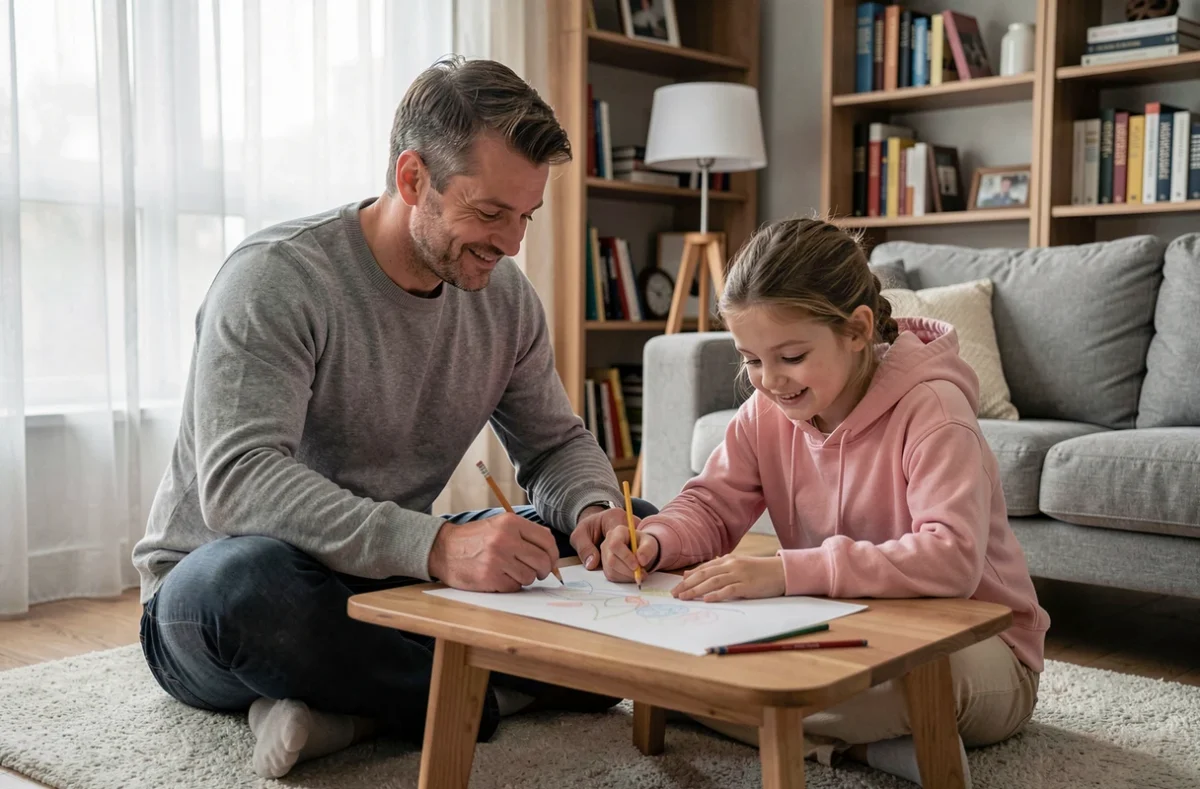
We don’t need to turn every moment into a “teaching activity.” Play fighting on the couch, drawing anything together, or simply sitting side by side nourishes the trust relationship.
This free time, without instructions or evaluation, shows the child that they matter beyond their achievements. The relationship takes precedence over performance: a child who feels unconditionally loved cooperates more easily in daily life.
10. Take care of yourself to remain available
An exhausted parent reacts more quickly under stress. Protecting your own sleep, taking a break when tension rises (stepping out of the room for a few seconds), and accepting to ask for help are not luxuries.
Kind communication with your children starts with a minimum of personal resources. When we feel overwhelmed, it’s better to say “I need two minutes of calm” than to shout. The child then learns by example that managing their emotions also involves recognizing their limits.
None of these tips work every time, and that’s normal. Kind education is not a perfect method; it’s a set of reflexes that we adjust over the days, depending on the child, their age, and what we have in the tank that morning.