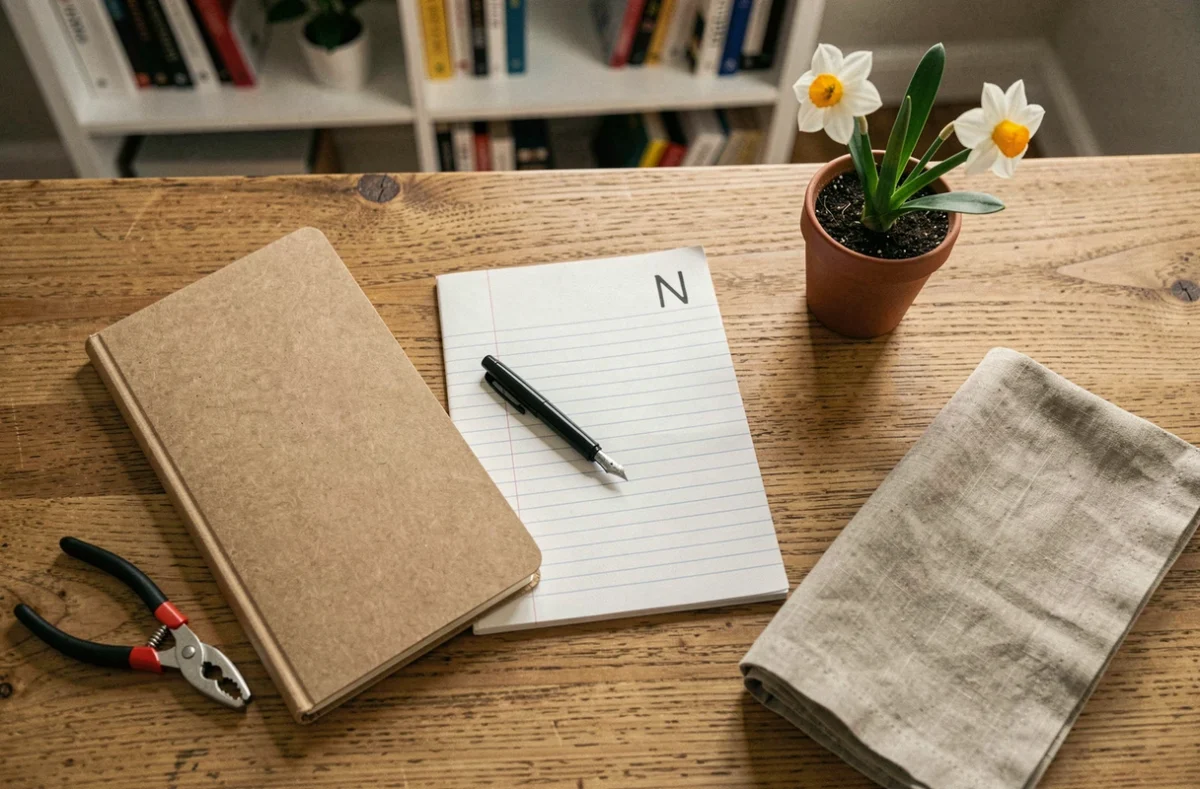
The letter N is not among the most spontaneous when thinking of everyday objects. Between the tablecloth and the teddy bear, the reflex stops quickly. However, this initial covers kitchen, storage, hygiene, and even survival items that we handle without paying attention. Creating an inventory of these objects prompts a reconsideration of their actual place in daily life, their durability, and the new rules governing their use.
Repairability and lifespan: the criteria that object lists ignore
Most compilations of N objects simply name items. Tablecloth, spirit level, cleaner. None pose the question of what we do with these objects when they wear out or break down.
Since the summer of 2026, European regulations on the right to repair have changed the game. A manufacturer is now required to offer spare parts and a repair solution for common household and electronic appliances. This framework transforms the very notion of a necessary object: a steam cleaner or a nebulizer is no longer a consumable to be replaced every three years, but a good designed to be kept and repaired.
When a consumer chooses to have an object repaired during the legal warranty period of conformity, the warranty is extended by twelve months from the date of repair. Before this reform, the extension was only six months.
The Repair Bonus, a public scheme launched at the end of 2022 for household appliances and electronics, was revalued in 2024, making the refurbishment of everyday devices financially accessible. Consulting a list of N objects then takes on a different meaning: each item can be evaluated from the perspective of its repairability rather than just its function.

N objects for the kitchen and laundry: beyond the tablecloth
The kitchen concentrates several N objects that we underestimate. The nut (long-lasting dried fruit) is a staple food found in most households. Nuts store easily, take up little space, and provide a durable nutritional reserve.
The doily protects the table daily, but it is especially the multi-purpose cleaner that deserves attention. A hygiene and cleaning product, it works on the countertop, dishes, and cooking surfaces. One bottle sometimes replaces three or four specialized products, reducing clutter under the sink and the volume of plastic waste.
On the laundry and storage side
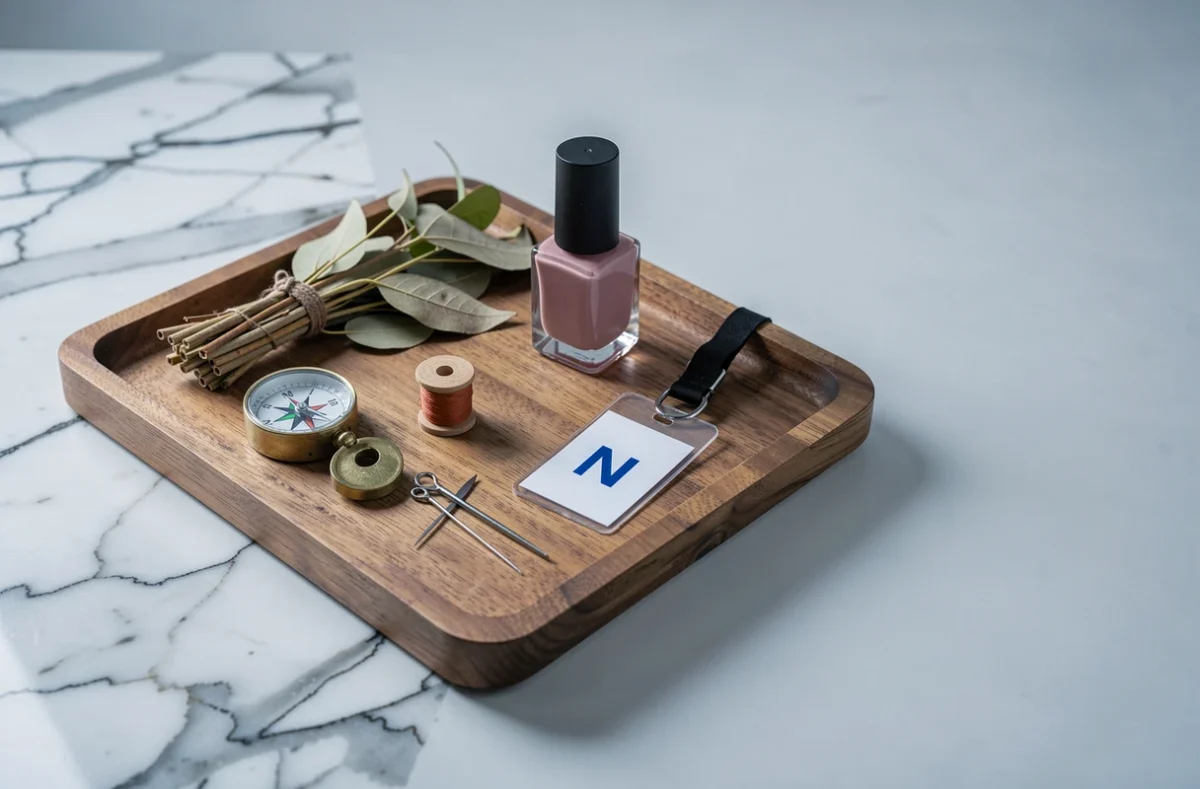
The sewing kit is one of those objects that we look for at the last minute. Needles, thread, spare buttons: it fits in a small box and prevents throwing away a garment for a tear. In the same storage logic, the nook (in the sense of a built-in shelf or a fitted corner) offers discreet storage space for bags, accessories, or folded laundry.
- Tablecloth and doily: surface protection, washable and reusable for several years
- Concentrated cleaner: reduces the number of bottles and limits packaging waste volume
- Sewing kit: extends the life of everyday textiles without special skills
- Nuts and hazelnuts: compact survival foods, storable for long periods without refrigeration
N objects related to hygiene and home safety
Cleaning the home involves several N objects that we don’t always think to list. The nebulizer (or spray) is used as much to humidify indoor air as to apply disinfectant solutions. In a home pharmacy, it is also used to administer respiratory treatments.
The spirit level, a basic DIY tool, ensures the correct installation of shelves and furniture. A poorly fixed shelf becomes a domestic risk, especially in a child’s room. It is an object costing less than ten euros that should be in every toolbox.
Emergency kit and evacuation plan
In a context of preparedness for emergencies, some N objects take on an unexpectedly practical dimension. The portable neon lamp (or emergency neon tube) provides long-lasting lighting in case of a power outage. Rope knots, both a technique and an object, allow for securing, suspending, or securing equipment during an evacuation.
A trash bag dispenser (some models are commercially named “neat bag”) facilitates storage and sorting in degraded situations. These elements do not appear on any Petit Bac type list, but they meet concrete needs for domestic survival.
N objects for children and family life
The teddy bear remains the quintessential comfort object. Present in most children’s rooms, it plays a role in emotional development well documented by pediatrics. The birdhouse, an educational object to be made from recycled materials, introduces children to observing local wildlife.
The Nintendo (handheld or home console) occupies a unique place. As a leisure electronic object, it raises the question of the lifespan of digital devices. Recent consoles now benefit from the European repair framework, meaning a manufacturer must provide spare parts for a minimum period after market release.
- Teddy bear: transitional object, often kept well beyond early childhood
- Birdhouse: family DIY project made from reclaimed wood
- Nerf (foam dart gun): outdoor toy that requires neither batteries nor a screen
Why organizing everyday objects by letter has practical interest
Alphabetical sorting is not just a game. In domestic stock management (pantry, pharmacy, toolbox), organizing by category and then by initial speeds up searches and reduces duplicate purchases. We buy less cleaner when we know exactly where the opened bottle is.
This tidying reflex aligns with the trend towards minimalism and second-hand. Rather than accumulating, precisely identifying what we own allows for giving, reselling, or repairing. Field feedback varies on the actual effectiveness of these sorting methods in daily life, but the principle remains simple: naming an object is already deciding to keep it or part with it.
The next time the letter N comes up in a conversation or inventory, it will no longer be limited to “tablecloth” and “teddy bear.” Behind each object lies a question of durability, repairability, and organization that far exceeds the realm of wordplay.