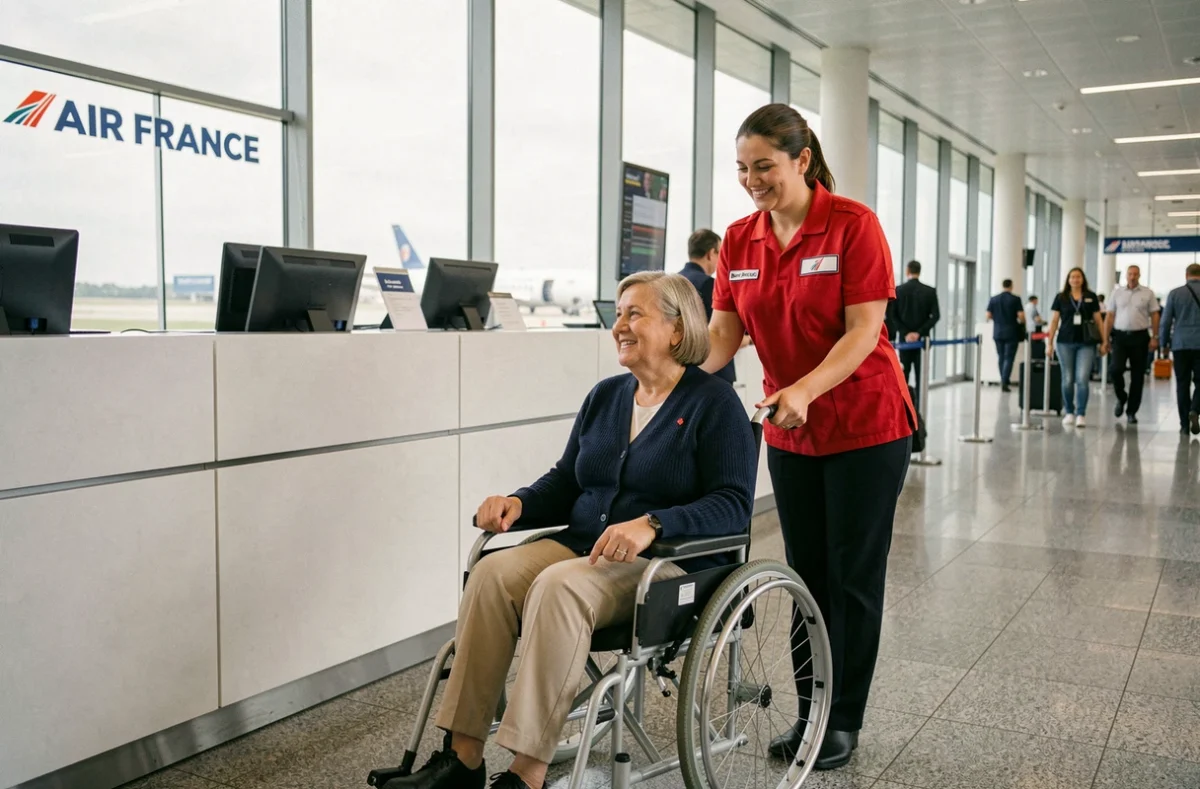
The European regulation (EC) No. 1107/2006, applicable since July 26, 2008, forms the legal basis for assistance to passengers with disabilities or reduced mobility on flights departing from or arriving in the European Union. At Air France, this framework translates into a set of free services, but not necessarily a specific pricing structure for disabilities. Understanding this distinction helps avoid misunderstandings during booking.
Regulation (EC) No. 1107/2006: obligations at no extra cost to the airline
The European text is clear: no carrier may refuse a booking or boarding on the grounds of disability, except for duly justified safety constraints. Airport assistance, whether it involves accompanying the passenger to the boarding gate, helping them settle into their seat, or transferring them between the terminal and the aircraft, cannot be charged to the passenger.
Air France recommends notifying any need for assistance as soon as the booking is made, ideally at least 48 hours before departure. This timeframe allows for logistical arrangements: transfer wheelchair, trained personnel, pre-positioning in the cabin. A late notification does not eliminate the right to assistance, but the quality of service may be affected.
To better understand the disabled fare for flights with Air France and the associated services, it is necessary to distinguish between what falls under European law and what constitutes a specific advantage of the airline.
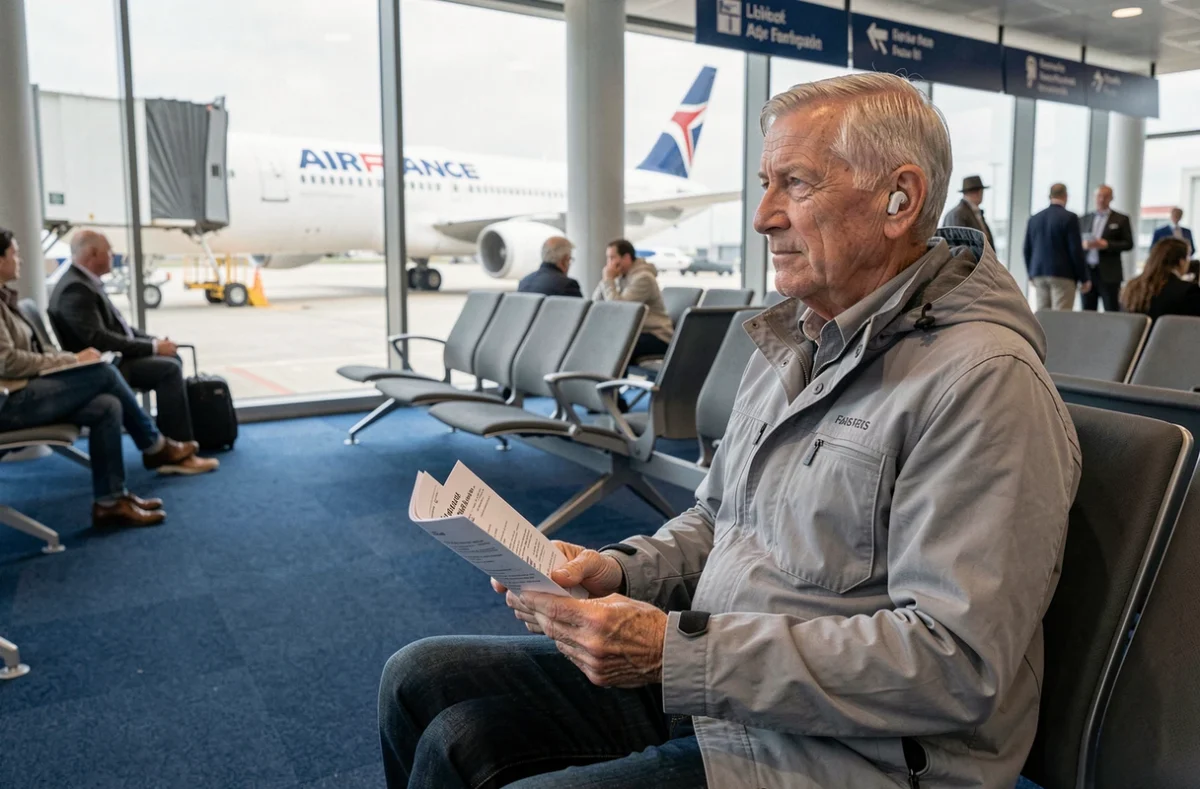
Wheelchair and medical equipment in the hold: Air France transport rules
The transport of personal wheelchairs remains a technical subject often underestimated. Airlines are required to transport mobility equipment free of charge, in addition to the standard baggage allowance.
Manual or electric wheelchair
A manual wheelchair generally poses no difficulty. It is taken care of in the hold at no cost.
The case of the battery-powered electric wheelchair is more complex. Lithium-ion batteries fall under IATA regulations on dangerous goods. Air France requires their disconnection, or even disassembly, before being placed in the hold. Liquid electrolyte batteries (lead-acid) require additional precautions against leaks.
We recommend providing the technical sheet of the wheelchair (brand, model, type, and battery capacity) as soon as the booking is made. An incomplete file delays authorization and may lead to a refusal to board the equipment, not the passenger themselves.
Assistance dog in the cabin
A certified assistance dog travels for free in the cabin on Air France flights, without occupying an additional seat. The passenger must provide proof of training by a recognized organization. This rule is distinctly different from the transport of a regular pet, which is chargeable and subject to weight restrictions.
Boarding assistance and allocation of the appropriate seat
The allocation of seats meets specific operational criteria as soon as a passenger presents a motor or sensory disability.
Passengers in wheelchairs are generally seated near accessible restrooms and at a reasonable distance from an emergency exit. A aisle seat is preferred to facilitate transfers. For visually impaired or blind passengers, cabin crew provide an individual safety briefing before takeoff.
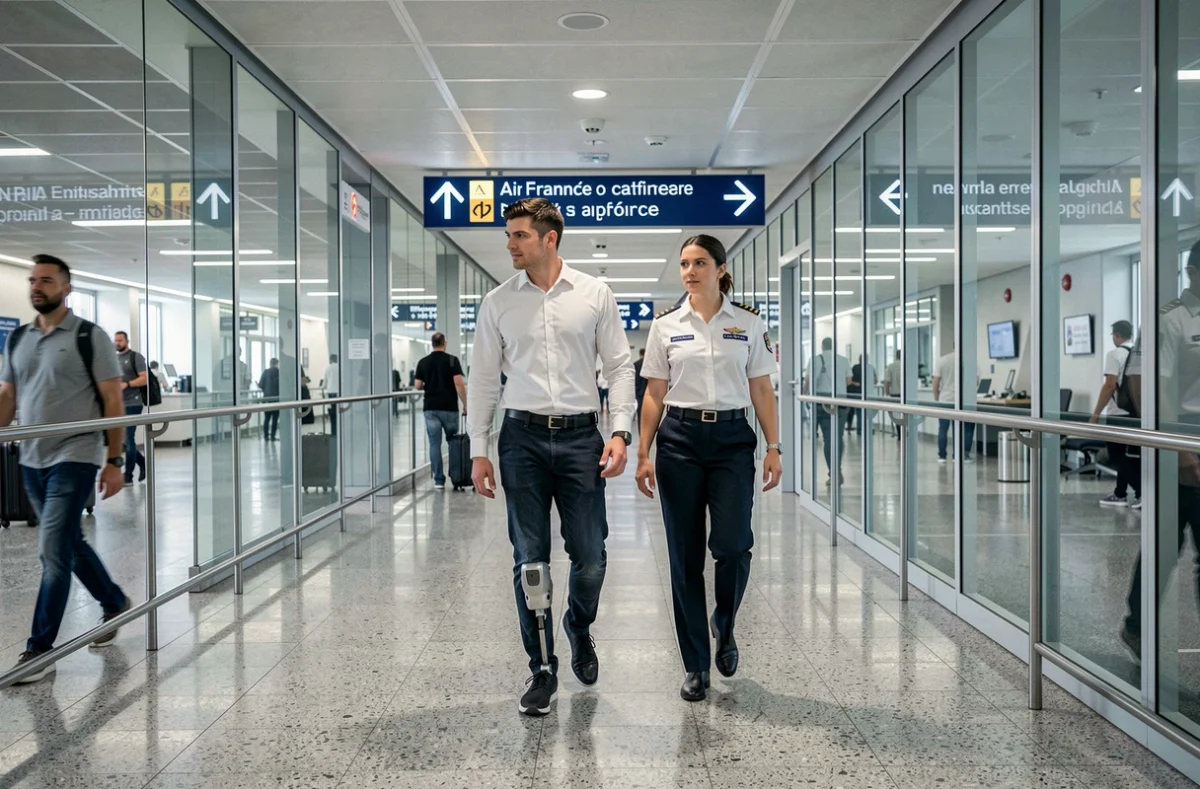
Accompanying person fare and discount for disabled persons on Air France flights
Air France does not offer a systematic discount on the ticket price solely based on the status of being a disabled person. The free services pertain to assistance and the transport of equipment, not the ticket itself. This is the most common misunderstanding.
When a passenger requires a mandatory medical companion, designated after review of the MEDIF form by the airline’s medical service, some airlines apply a discount on the companion’s ticket. At Air France, this possibility varies depending on the medical file and booking class. The MEDIF form must be completed by the treating physician and submitted to the medical service in a timely manner.
- The MEDIF form is required for any passenger whose health condition necessitates special medical attention or specific equipment in the cabin (oxygen, stretcher)
- The companion designated by the medical service may sometimes benefit from a preferential fare, but this discount is neither automatic nor guaranteed
Booking for a person with reduced mobility is preferably done through Air France’s Saphir call center, dedicated to disabled passengers. This channel centralizes the request for assistance, medical validation, and seat allocation in a single exchange, which limits transmission errors between services.
Contacting the Saphir service in advance, with the technical sheet of the wheelchair and the MEDIF form in hand, remains the most reliable method to secure the entire journey before the flight.